One-Legged Cable Kickback
Also known as: Standing Cable Glute Kickbacks
One-Legged Cable Kickback is an isolation cable exercise that trains the glutes.
StrengthCableIntermediateIsolationPush
Primary muscles: Glutes
Secondary muscles: Hamstrings
How to do it
- Hook a leather ankle cuff to a low cable pulley and then attach the cuff to your ankle.
- Face the weight stack from a distance of about two feet, grasping the steel frame for support.
- While keeping your knees and hips bent slightly and your abs tight, contract your glutes to slowly "kick" the working leg back in a semicircular arc as high as it will comfortably go as you breathe out. Tip: At full extension, squeeze your glutes for a second in order to achieve a peak contraction.
- Now slowly bring your working leg forward, resisting the pull of the cable until you reach the starting position.
- Repeat for the recommended amount of repetitions.
- Switch legs and repeat the movement for the other side.
Track it with MyoAmigo
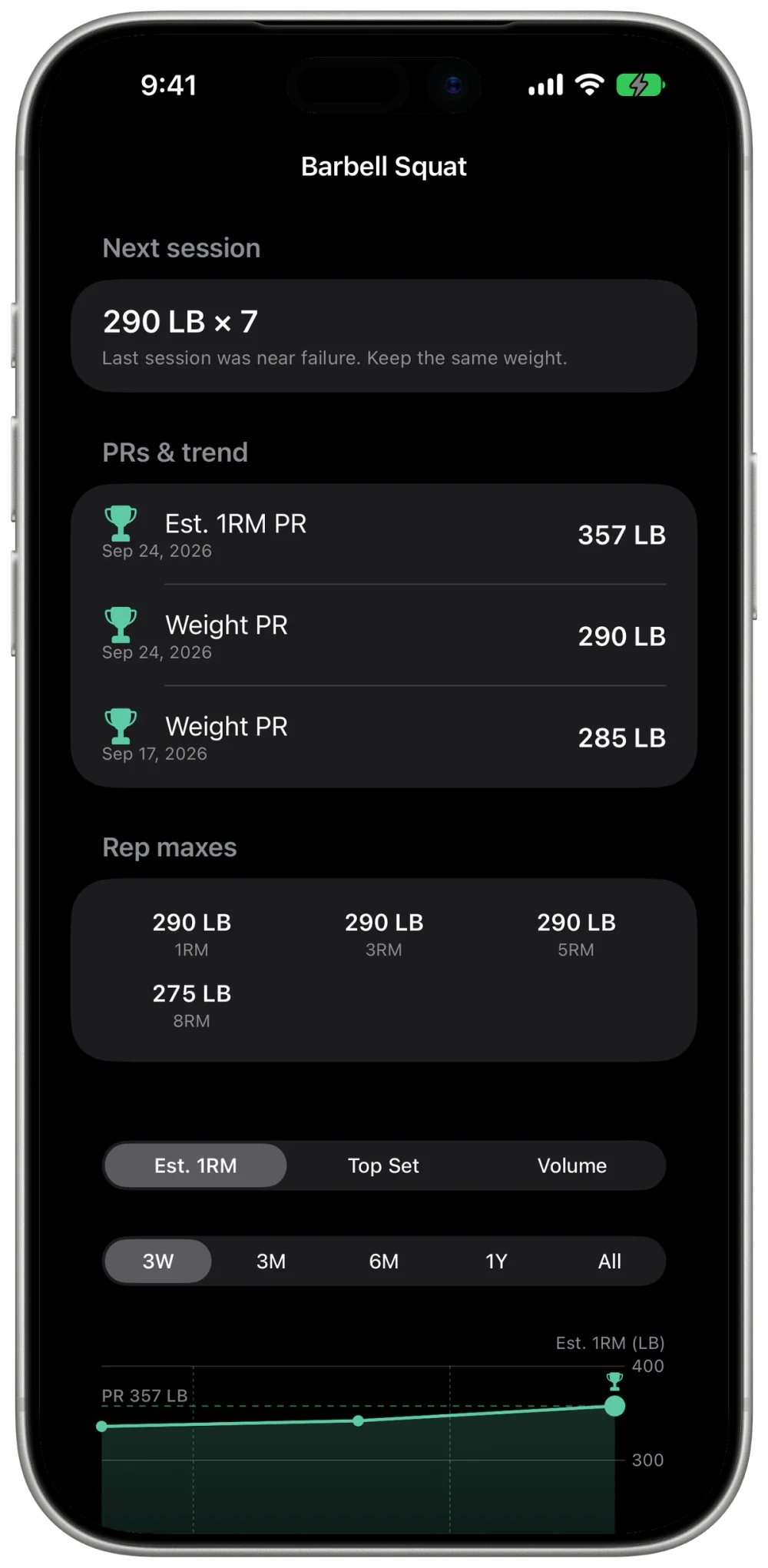
MyoAmigo pre-fills each set's weight and reps, marks new personal records, charts your estimated 1RM trend so you can see strength move without testing a true max, and flags a stall with a concrete fix. It also credits this work toward your weekly Glutes volume on the MyoMap heatmap. New to the movement? Start with picking a working weight and progressive overload.