Cable Crunch
Cable Crunch is an isolation cable exercise that trains the abdominals.
StrengthCableBeginnerIsolationPull
Primary muscles: Abdominals
How to do it
- Kneel below a high pulley that contains a rope attachment.
- Grasp cable rope attachment and lower the rope until your hands are placed next to your face.
- Flex your hips slightly and allow the weight to hyperextend the lower back. This will be your starting position.
- With the hips stationary, flex the waist as you contract the abs so that the elbows travel towards the middle of the thighs. Exhale as you perform this portion of the movement and hold the contraction for a second.
- Slowly return to the starting position as you inhale. Tip: Make sure that you keep constant tension on the abs throughout the movement. Also, do not choose a weight so heavy that the lower back handles the brunt of the work.
- Repeat for the recommended amount of repetitions.
Track it with MyoAmigo
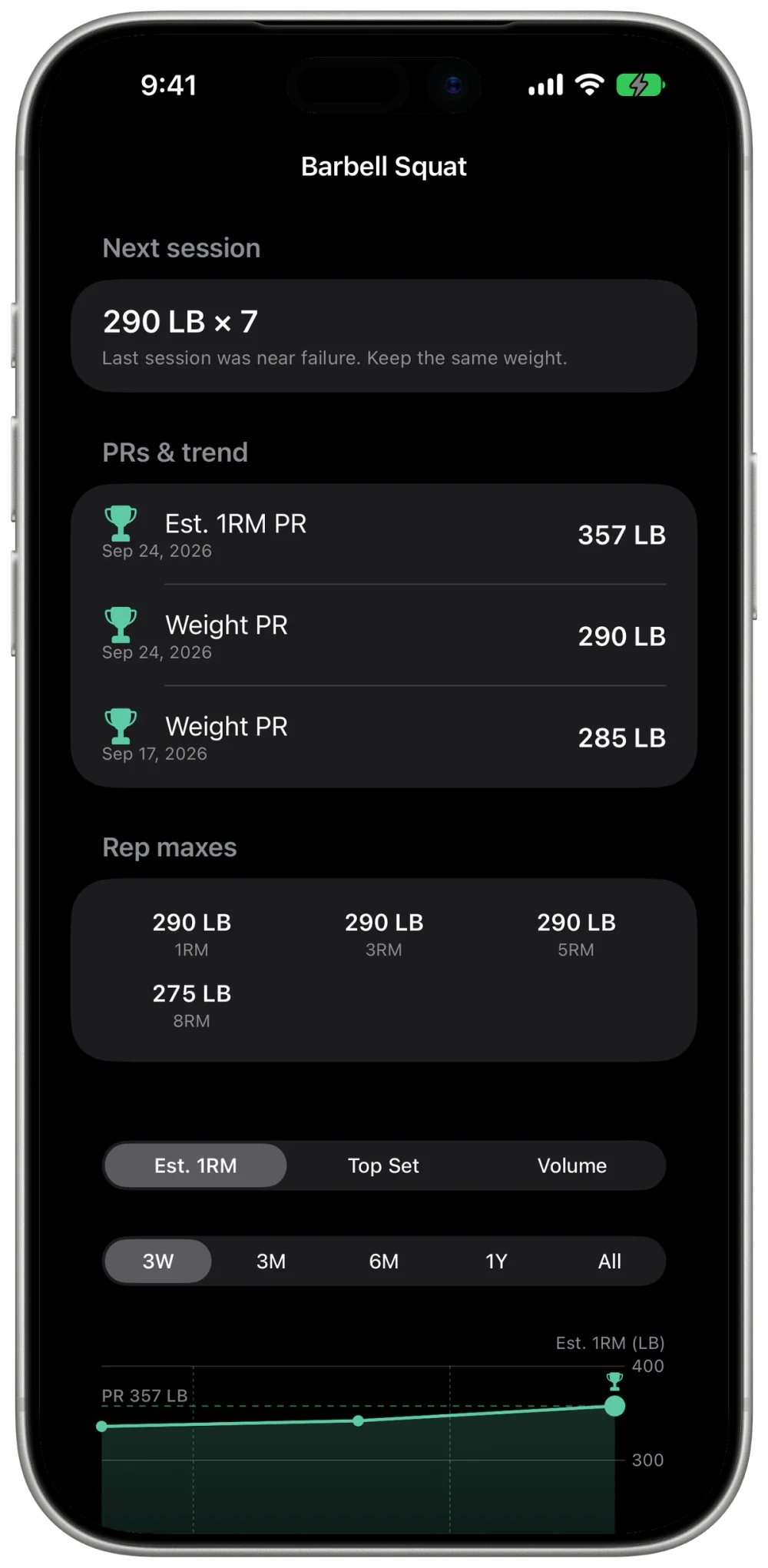
MyoAmigo pre-fills each set's weight and reps, marks new personal records, charts your estimated 1RM trend so you can see strength move without testing a true max, and flags a stall with a concrete fix. It also credits this work toward your weekly Abdominals volume on the MyoMap heatmap. New to the movement? Start with picking a working weight and progressive overload.